Unlock Your Medspa’s Full Potential with Your Vision, Our Expertise, and Proven Systems
Unlock Your Medspa’s Full Potential with Your Vision, Our Expertise, and Proven Systems


You reduce med spa no-shows by making each booking carry real commitment and automating the follow-up around it: a card or deposit to book, an enforced cancellation policy, layered reminders, AI that catches missed calls, and a waitlist that backfills the slots that still slip.
If your calendar looks full but your daily production keeps coming up short, those gaps are usually the leak. A booked chair that empties an hour before the appointment is worse than an open slot because you turned away other clients to hold it. By the time the cancellation lands, there is no time to fill it.
The problem is common and measurable. Industry estimates put no-show and last-minute cancellation rates across aesthetic and beauty services in the 10 to 20 percent range, and higher for first-time clients who have nothing invested yet. That is not a personality problem with your clients. It is a gap in the systems around your calendar, and systems are fixable.
We have spent more than 20 years helping med spa owners close that gap. At MedSpa Optimization, we treat no-shows the way we treat any revenue leak, by finding where commitment breaks down and building a process that holds. The spas that fix this rarely do it with one clever text. They do it with a stack of small, boring safeguards that each catch a different kind of cancellation.
If you would rather not assemble that stack on your own, contact us today about operations optimization, and we will help you build a calendar that holds.
People rarely skip an appointment to be rude. They skip it because nothing in the booking made the commitment feel real, and nothing in your process caught them before the slot went cold. Once you map the reasons against what each one costs, the fixes stop feeling like guesswork.
Most no-shows trace back to one of a few predictable causes. A client forgets or double-books. The booking carried no friction, so cancelling feels free. The policy exists on paper but gets waived at the front desk. Reminders go out too late or through one channel. A call to reschedule hits voicemail and never connects. Each cause has a different fix, which is why a single tool rarely solves the whole problem.
| What’s Driving the No-Show | What It Looks Like | What It Costs You |
|---|---|---|
| Life gets in the way | Client forgets, double-books, or hits a work conflict | A prime slot empties with no time left to refill it |
| Booking carries no commitment | No card on file, no deposit, nothing at stake | Clients treat the appointment as optional |
| Policy exists but isn’t enforced | A fee on paper that staff waive to avoid friction | Clients learn that cancelling is consequence-free |
| Reminders are slow or single-channel | One text the morning of, easy to miss | Clients don’t confirm or reschedule in time |
| Calls go to voicemail | The front desk is mid-treatment, slammed, or after hours | Reschedules and new bookings never connect |
| No waitlist to backfill | A cancellation just becomes an empty hole | That hour’s revenue is gone for good |
The sticker cost of a missed appointment is the treatment price, but the real number runs higher. You paid for the room, the staff hours, and often the marketing that won the booking. A single empty chair can cost a few hundred dollars in lost production, and a handful each week stacks into thousands a month. Worse, a no-show often hides a client who quietly churned, which means you also lost the rebookings and referrals that client would have driven. When you frame no-shows against revenue per hour and provider utilization, the case for fixing them gets obvious fast.
The single biggest lever is also the simplest. When a booking costs nothing to make and nothing to break, some share of clients will treat it as a maybe. Putting a card on file or collecting a small deposit turns the appointment into a real commitment without turning anyone away.
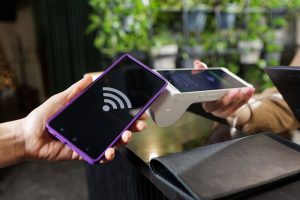
You have a few options, and they scale with the risk of the slot:
The point is not to punish clients. It is to align their incentive with yours. We typically start spas with a card-on-file requirement because it removes the no-stakes booking without asking for money up front, then layer deposits onto the appointments most likely to be skipped.
A deposit means nothing without a clear rule behind it, and a rule means nothing if your front desk waives it whenever a client pushes back. Most spas already have a cancellation policy. The ones that hold their calendar are the ones that enforce it the same way every time.
Write the policy in plain terms and put it everywhere the client touches your business: the booking page, the confirmation message, and the intake form they sign. State the window, usually 24 or 48 hours, and state exactly what happens if they miss it. Then back your team. The hardest part is never the wording. It is the moment a regular asks for an exception, and your front desk has to hold the line politely. Give your staff a script and your blessing to use it, so enforcement does not depend on who happens to be at the desk that day.
Consistency is what trains client behavior. When the policy applies to everyone, clients stop testing it, and your no-show rate settles into a lower, more predictable band.
Reminders are the highest-return habit in scheduling, and the research backs it up plainly. Studies of appointment reminder systems consistently show no-shows dropping by roughly a third once a reliable reminder sequence is in place. The mistake most spas make is sending one reminder, through one channel, at one time.
A reminder sequence that actually moves the needle looks more like this:
Mixing channels matters as much as timing. Some clients live in their text messages, others only open email, and a short phone touch can rescue a high-value booking that has gone quiet. The goal is simple. By the morning of the appointment, you should already know which clients are coming and which slots you need to scramble to fill.
Even a great reminder sequence has a blind spot: the moments your team cannot answer the phone. A client tries to reschedule during a treatment, or calls at 9 p.m. to book, and the call goes to voicemail. That missed connection is a no-show or a lost booking waiting to happen.
This is where automation earns its keep. Our AI-powered booking and follow-up system answers calls, captures leads, and schedules appointments 24/7, even after hours, so a client who wants to reschedule can do it the moment they think of it instead of forgetting by morning. It handles inbound and outbound calls, sends confirmations, and follows up across phone, text, and email without adding a single hire to your front desk.
The quiet win is the missed call you never knew you missed. When every inquiry gets a fast, human-sounding response, fewer slots sit empty because a client could not reach you. Speed of response is one of the strongest predictors of whether an inquiry turns into a kept booking, and an always-on system removes the gap entirely.
No matter how tight your systems are, some cancellations will happen. The question is whether that freed-up hour stays empty or quietly gets refilled. A waitlist turns your unavoidable cancellations into an opening someone else is glad to grab.
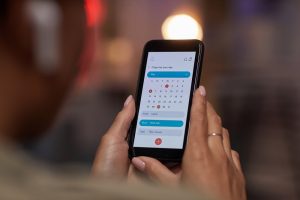 Set it up so the work happens on its own:
Done manually, a waitlist is a sticky note that never gets called. Done automatically, it is one of the fastest ways to protect daily production, because the same cancellation that used to cost you an hour now costs you almost nothing. The slot refills before the original client has even left your reschedule queue.
Tools only work if your team uses them the same way every day, and you only improve what you measure. The final step is human, and it is where good spas pull ahead of average ones. Your front desk sets the tone for how seriously clients take their appointments, from how they confirm the policy to how they handle a reschedule request.
Build the habits that hold the calendar. Train staff to confirm the cancellation window out loud at booking, to recover gracefully when a client wants to bend it, and to log every no-show with a reason rather than letting it disappear. Then watch the numbers. Track your no-show rate, your cancellation rate, and which providers, services, and time slots run highest, so you can act on patterns instead of hunches. When you streamline your scheduling and front-desk workflows, the whole system runs with less owner involvement and fewer holes.
Data also tells you who to win back. A client who no-shows once is often still reachable, and automated email and reactivation campaigns can pull a quiet client back onto the calendar before they drift to a competitor. The same record that flags a problem becomes the list that recovers the revenue.
No-shows are not a fact of life in the aesthetics business; they are a sign that the systems around your calendar have gaps, and every gap on that list has a fix. Deposits create commitment, enforced policies set expectations, layered and automated reminders catch the forgetful, AI closes the after-hours gap, a waitlist refills what slips through, and your front-desk data tells you where to tighten next.
At MedSpa Optimization, we have spent two decades turning busy-but-leaky calendars into predictable, profitable ones. If you would rather not build that stack piece by piece on your own, we can help you put it in place and tie it to the numbers that matter. Reach out for a free strategy session, and we will map your biggest leaks, or call us directly at (305) 209-0538 to talk it through.
A good med spa no-show rate is under 10 percent, and the best-run spas push under 5 percent. Industry estimates put untreated rates closer to 10 to 20 percent, so if you are sitting in that band, the gap is opportunity, not a lost cause. The combination of deposits, layered reminders, and a waitlist is what closes it.
Both work, and the strongest setups use them together. A card on file lets you charge a fee when a client breaks the window, while a deposit collects commitment up front for high-demand or high-cost slots. We usually start with a card-on-file requirement because it adds commitment without asking for money before the visit.
Use a sequence rather than a single message. A confirmation at booking, a reminder a few days out, a confirm-or-reschedule request the day before, and a short nudge a few hours ahead covers the ways clients forget. Spacing the touches across channels catches the people a single text would miss.
Applied consistently and explained clearly, a fair policy rarely costs you good clients. The clients who value their results respect a business that protects its time, and the ones a policy filters out are usually the ones who were going to no-show anyway. The key is enforcing it the same way for everyone, so it reads as standard rather than personal.
Every recovered appointment is near-pure margin, because the room and staff are already paid for. Cutting a 15 percent no-show rate down to the low single digits can return dozens of slots a month to a busy spa, and those hours compound through rebookings and referrals. That is why we treat the no-show rate as a core profitability metric, not a scheduling nuisance.

Growing a medspa takes more than offering great services. Success comes from building trust, increasing visibility, and keeping clients engaged. A well-planned marketing strategy attracts new clients, s...
In today’s rapidly evolving med spa industry, success depends on more than offering high-end treatments; it requires operational precision, strong branding, and a seamless client experience. Many med sp...

Established med spa owners typically pay themselves $300,000 to $375,000 per year, per AmSpa's 2024 industry benchmark on average revenue is near $1.4 million with 20% to 25% net margins. Your defensibl...

Successful med spa owners do not buy a single product, they layer five compliance-grade software categories (HIPAA-compliant practice management and EMR, 24/7 AI booking, marketing automation, financial...

Why Schedule a Call With Us?


